Your patients are asking. Your clients are skeptical. And somewhere between the wellness influencers and the peer-reviewed journals, the truth about light therapy keeps getting lost.
You’ve probably encountered some version of these objections:
- It’s just a trend.
- It’s basically a tanning bed.
- There’s no real science behind it.
The fact of the matter is, there is real science behind it – a lot of it. And the myths making the rounds are not just wrong; they’re keeping people from a modality that’s been studied for decades across thousands of clinical trials.
This post breaks down the six most common myths about light therapy and puts the research front and center.
TL;DR:
Light therapy (also called photobiomodulation) is backed by thousands of peer-reviewed studies and works through a well-understood cellular mechanism. The myths circulating online don’t hold up against the evidence. Here’s what the science actually says.
Myth #1: “Does Light Therapy Work, or Is It Just a Placebo?”
This is the most common objection, and it’s the most important one to address directly.
Photobiomodulation (PBM), the clinical term for therapeutic light therapy, is one of the most studied non-invasive modalities in modern medicine. According to data compiled from the Hashmi et al. (2010) systematic review published in PM&R, over 700 randomized controlled trials and more than 4,000 peer-reviewed articles have examined PBM’s effects across a wide range of conditions.
The mechanism is not theoretical. When specific wavelengths of red and near-infrared light penetrate tissue, they are absorbed by cytochrome c oxidase (COX), a key enzyme in the mitochondria’s electron transport chain. This absorption stimulates increased ATP production, the cellular fuel that powers repair, recovery, and regeneration. As Hamblin documents in AIMS Biophysics, downstream effects include improved blood flow, reduced oxidative stress, and modulation of inflammatory signaling.
This is cellular biology, not conjecture. The placebo argument doesn’t survive contact with the mechanistic evidence.
Myth #2: “Light Therapy Is the Same as a Tanning Bed”
This one causes genuine harm because it conflates two fundamentally different technologies.
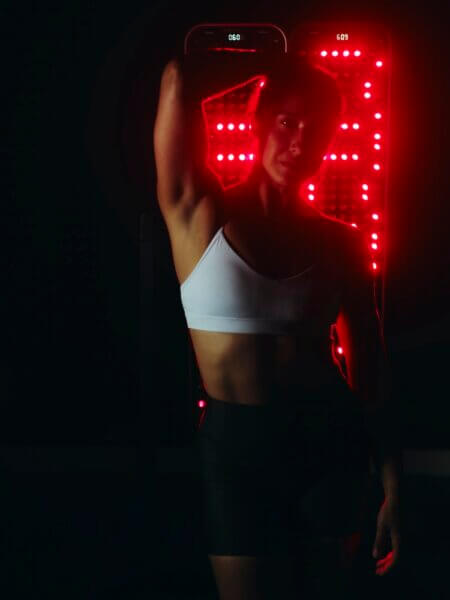
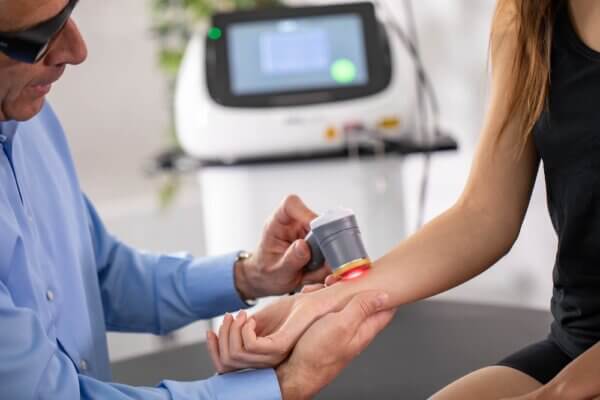
Tanning beds emit UV radiation, specifically UVA and UVB wavelengths, which damage DNA and are directly associated with skin cancer risk. Therapeutic light therapy devices, including red light beds like TheraLight and Class 4 laser systems like those from Aspen Laser, operate in the red (600–700 nm) and near-infrared (700–1100 nm) ranges.
These are non-ionizing wavelengths. They do not damage DNA or cause cellular mutation. No published research has established a causal link between red or near-infrared light therapy and cancer. The wavelengths work with cellular biology, not against it.
The confusion is understandable — both involve light, and both involve lying in a bed. But the comparison ends there, completely.
Myth #3: “Red Light and Near-Infrared Light Do the Same Thing”
This myth trips up even well-informed practitioners and operators.
Red light (approximately 620–680 nm) is absorbed primarily in the superficial layers of the skin, making it highly effective for skin health, wound healing, collagen production, and surface-level inflammation. Near-infrared light (approximately 800–1100 nm) penetrates significantly deeper, reaching muscle tissue, bone, and even neural structures. We share more about the differences here.
As documented in this study in Lasers in Surgery and Medicine, near-infrared light’s depth of penetration makes it applicable for systemic, neurological, and musculoskeletal conditions in ways that red light alone cannot achieve.
This distinction matters clinically. A practitioner using red light for deep tissue recovery is under-dosing the target. A full-body system like TheraLight delivers both wavelengths simultaneously, which is precisely why whole-body photobiomodulation produces outcomes that targeted devices can’t replicate.
Understanding wavelength-specific applications is the difference between good results and great ones.
Myth #4: “More Light, More Results. Just Blast It.”
The dose-response relationship in photobiomodulation is real, and it cuts in both directions.
The Arndt-Schulz principle applies here: too little light produces minimal effect; the right dose produces optimal cellular response; too much light can inhibit the very processes you’re trying to stimulate. Hamblin describes this as a “pronounced biphasic dose response” — one of the most well-documented phenomena in PBM research.
Power, wavelength, time, and delivery method all interact. Class 4 lasers like those in the Aspen Laser line deliver therapeutic doses precisely and efficiently, particularly for deep tissue targets, because power output directly affects how much light actually reaches the intended tissue depth. An underpowered device may produce no measurable clinical effect at all.
This is why device quality and clinical protocol design are not optional details. They’re the entire point.
Myth #5: “Light Therapy Is a New Wellness Trend”
Light therapy went viral on social media, but its scientific roots go back much further than TikTok.
The therapeutic application of light has been studied since the early 20th century. NASA research in the 1990s explored red LED use to accelerate wound healing in astronauts. These findings that seeded decades of clinical investigation. In one study, the development of lasers for medical use followed just a few years after the laser’s discovery in 1960, and LLLT has become “an increasingly mainstream modality, especially in the areas of physical medicine and rehabilitation.”
Today, photobiomodulation is used across dermatology, sports medicine, pain management, physical rehabilitation, and neurology. A 2025 systematic review published in the Journal of Translational Medicine describes PBMT as a rapidly expanding area of translational research bridging photophysics, mitochondrial biology, and clinical rehabilitation, with clinical applications now extending into neurological, ophthalmic, and oncologic conditions.
What’s new is the public awareness. The science has been building for decades.
Myth #6: “Results Are Immediate, or It Doesn’t Work”
Here’s where Aspen’s experience actually pushes back on conventional wisdom…in a good way.
With Class 4 laser therapy, results can come fast. Patients treated with Aspen Laser often report noticeable relief in as little as 10 minutes. That’s not marketing language; it’s what practitioners see in the treatment room when therapeutic doses reach target tissue efficiently and the cellular response kicks in quickly.
Red light therapy beds work on a different timeline, but still a shorter one than most people expect. Aspen’s guidance is simple: commit to 30 days of consistent sessions, and you will notice a difference. Full-body photobiomodulation works systemically. It needs repetition to build on itself, and the compounding effect becomes clear within that first month.
The real myth here isn’t that results take forever. It’s that all light therapy works the same way on the same timeline. Device type, power output, wavelength, and consistency of use all determine how quickly results show up. The practitioners and facility operators who see the strongest outcomes are the ones who match the right tool to the right protocol, and then stick with it.
Set the right expectations, and light therapy delivers. That’s not a promise; it’s what the clinical experience shows.
The Bottom Line
The science behind light therapy is not an asterisk. It’s the foundation. Over 4,000 peer-reviewed studies. Hundreds of randomized controlled trials. A well-characterized cellular mechanism. Clinical applications across specialties.
The myths circulating in waiting rooms, locker rooms, and comment sections are not keeping pace with the evidence. Your patients, clients, and athletes deserve decisions made on facts, not noise.
Whether you’re considering adding light therapy to your clinical practice, your facility, or your personal recovery protocol, the research is there. The results are real. And the technology has never been more accessible, more precise, or more validated than it is today.
If you’re ready to explore what light therapy can do for your practice or facility, connect with the Aspen team to learn more.
Sources:
- Hashmi, J.T. et al. (2010). Role of low-level laser therapy in neurorehabilitation. PM&R, 2(12 Suppl 2), S292–S305. https://pubmed.ncbi.nlm.nih.gov/21172691/
- Hamblin, M.R. (2017). Mechanisms and applications of the anti-inflammatory effects of photobiomodulation. AIMS Biophysics, 4(3), 337–361. https://pmc.ncbi.nlm.nih.gov/articles/PMC5523874/
- Tedford, C.E. et al. (2015). Quantitative analysis of transcranial and intraparenchymal light penetration in human cadaver brain tissue. Lasers in Surgery and Medicine, 47(4), 312–322. https://pubmed.ncbi.nlm.nih.gov/25772014/
- Shivappa, P. et al. (2025). From light to healing: photobiomodulation therapy in medical disciplines. Journal of Translational Medicine, 23, 1430. https://link.springer.com/article/10.1186/s12967-025-07466-3