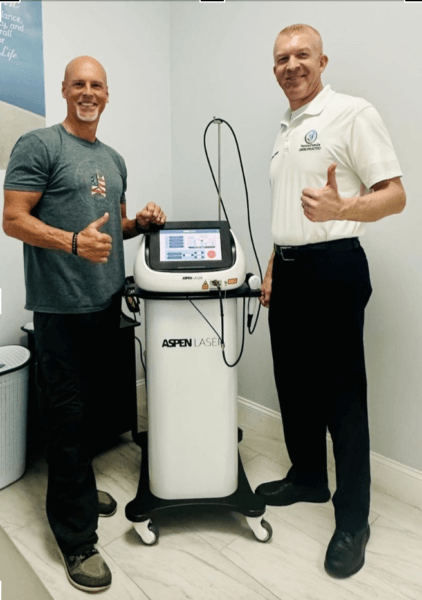
Laser therapy is different from traditional pain relief options primarily because it’s non-invasive and addresses pain or disrepair at the cellular level. Traditional methods are usually addictive pills that merely mask symptoms, invasive surgeries that require extensive recovery, or physical therapy that takes months or years.
Low Level Laser Therapy (LLLT) applies light to a targeted area to promote tissue regeneration, reduce inflammation, and relieve pain.[1] This means light is absorbed by the body (in the mitochondria) and causes a chemical change on a cellular level.
This is good news for:
- Chronic pain sufferers
- Anyone struggling with an opioid use disorder
- Athletes with injuries
- Those looking for non-invasive options
And anyone who appreciates innovative, forward-thinking wellness solutions.

How Does LLLT Work?
Low-level light therapy applies a low-level, gentle red or near-infrared light to the body. The light is absorbed by the cell’s energy plant, the mitochondria, and this activates Cytochrome c oxidase, the final enzyme.
This enzyme converts energy your body absorbs into a form of energy your cells can use to heal, function, and renew, called ATP.[2] With more ATP, here’s what can happen:
- Your body’s natural capacity to heal is unlocked
- Cells can regenerate, repair, and perform better
- Your body can heal faster
- Your body can reduce inflammation pathways
Ultimately, if your body is equipped to repair itself at the cellular level, you can experience less pain, recover faster from injuries, and be less susceptible to illness.
Which means you’ll feel better and can do more of everything else.
What Are The Benefits of Laser Therapy Vs. Traditional Pain Treatments?
Low-level lasers can help reduce inflammation and edema.[3] Each of these is a common marker for pain and can be difficult to manage, especially for chronic pain sufferers.
Additional benefits of laser therapy for pain relief [4] vs. traditional treatments include:
- Promotes wound healing for faster recovery
- Prevents tissue damage
- Is non-invasive compared to traditional methods
- Low-risk with rare to no side effects
- Has broad applications
For those pursuing alternative medicine solutions or pain relief that’s not addictive or invasive, laser therapy could be the answer.
How Do Outcomes Differ In Laser Therapy Vs. Traditional Pain Approaches?
Studies have shown LLLT consistently outperforms transcutaneous electrical nerve stimulation (TENS) and medication interventions, especially for neuropathic pain (30% higher pain reduction).[5]
In applications for wound healing, LLLT accelerated healing and enhanced tissue regeneration, resulting in a 25% reduction in healing time, compared to conventional treatments.[6]
Safety is another primary concern, and LLLT is considered safe and gentle with rare or minimal side effects.[7] This is in stark contrast to pharmaceutical interventions that are associated with serious side effects and even addiction.
How Can I Get The Most Out of Laser Therapy?
Laser treatments can work quickly, with many patients seeing immediate improvement or measurable benefits after just one session or within the first few weeks.
However, to get the most out of laser therapy and ensure the best outcomes, follow these recommendations:
- Follow post-treatment advice from your professional laser therapy provider
- Stick closely to continuing treatment schedules
- Protect treated areas and avoid sun exposure
- Stay hydrated and moisturized
- Avoid any skin irritants like harsh exfoliants
What’s Better: Laser Therapy vs. Traditional Pain Relief? The Answer is Clear
Not only is laser therapy often more effective, but it also doesn’t come with all the negatives of traditional pain relief solutions.
- Laser therapy doesn’t mask symptoms; it changes cellular function
- Laser therapy accelerates how your body heals and repairs
- Laser therapy has rare or no side effects
Shine some light on your pain or your patient’s pain and see the benefits for yourself!
Sources:
[1]https://pmc.ncbi.nlm.nih.gov/articles/PMC4291815/
[2]https://pmc.ncbi.nlm.nih.gov/articles/PMC9980499/#
[3]https://pmc.ncbi.nlm.nih.gov/articles/PMC4291815/
[4]https://www.mayoclinicproceedings.org/article/S0025-6196%252812%252962034-5/fulltext
[5][6][7]https://www.sciencedirect.com/science/article/pii/S1572100025000468#