Red light and near-infrared light both fall under the umbrella of photobiomodulation therapy (PBM) but operate at different wavelengths for different applications.
Red light has a shorter, visible wavelength that operates on the surface, while near-infrared light is not visible to the naked eye and penetrates deeper. The applications and benefits of each are extensive and specific.
Here’s an overview of red light vs near-infrared light:
- Red Light Therapy is a general term for visible red-wavelength PBM
- Near-Infrared (NIR) Therapy focuses on deeper-penetrating invisible light
- Red light therapy targets visible wavelengths (around 630-66 nm) for surface-level interaction
- NIR wavelengths (up to 1070 nm) go deeper, reaching muscles, joints, traumatic brain injuries (TBI), and nerves to trigger a systemic biological response
- Red light therapy is beneficial for reducing fine lines and wrinkles, increasing collagen production, accelerating wound healing, reducing acne, improving skin, and much more
- Near-infrared light is beneficial for deep tissue healing, chronic pain management, muscle recovery, brain stimulation, and more.
- Only devices with clinically validated wavelengths and power parameters can be trusted as effective
Wellness providers and biohackers should clarify which approach is best based on specific needs.
Wavelengths of Red Light
Each wavelength provides similar health benefits, ranging from skin health and pain relief to reduced inflammation and improved mood.[1] The primary difference is where the effects are felt in the body. Surface-level or skin healing is more common with red light therapy, while deeper muscle relief and systemic wellness are more commonly associated with NIR.
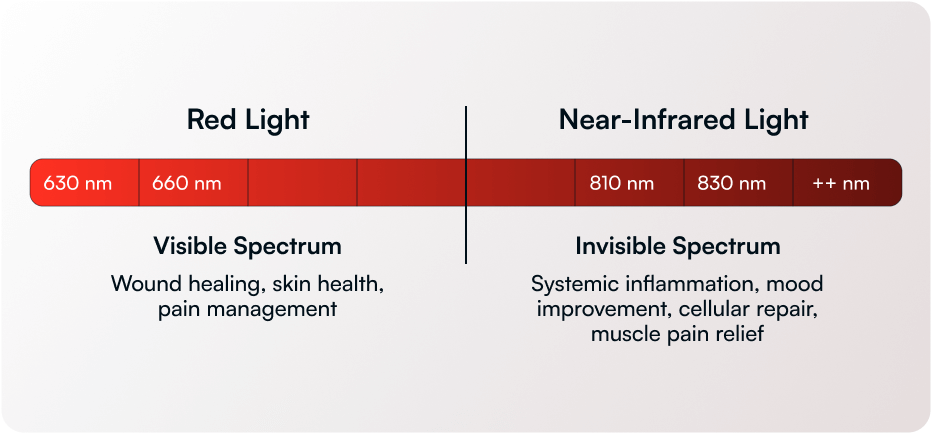
Red Light vs Near-Infrared Light: Both Are Photobiomodulation
Photobiomodulation Therapy (PBM) is a scientifically validated medical term for the use of red and near-infrared wavelengths (600-1070 nm) to stimulate cellular healing and surface-level effects.
Red light therapy and near-infrared (NIR) therapy differ in depth, precision, and intent. Red light therapy primarily targets visible wavelengths (around 630-66 nm) that interact with surface-level cells and skin tissue.
NIR extends the range into the near-infrared (up to 1070 nm), reaching muscles, joints, and nerves, and triggers a systemic biological response. Red light supports the outer layer of wellness, while near-infrared light works at the core of cellular metabolism, improving factors such as circulation.
Or, as Jake Paul puts it:“Infrared light is for burning fat and heats you from the inside. Red light is for energy and inflammation. Know the difference.”
Patient Results of Clinically-Validated Photobiomodulation
From patients, customers, and athletes across the country, using Aspen devices:
“Love the immediate effects and the session itself is mind-altering. Meditative state of mind occurs quickly.” – Terryn S.
“I have had bad anxiety as I get older, and this has helped me to cut down those bad depression days. I feel as though this helps me sharpen my mind and body and allows me to have more control over my emotions.” – Seth S.
How To Choose The Right System At Home, The Clinic, or The Locker Room
Only devices with clinically validated wavelengths and power parameters can be trusted to be effective. When evaluating which devices to choose for the right PBM system:
- Depth of the issue being targeted (skin vs systemic)
- Overall treatment goals (recovery, pain, wellness, performance, aesthetics)
- Power output and wavelength options
- Safety certifications and FDA clearance
- Ease of use
The Bottom Line On Red Light vs Near-Infrared Light
- Red Light is a general term for visible red-wavelength PBM therapy
- Near-Infrared (NIR) light focuses on deeper-penetrating invisible light
- RLT primarily targets visible wavelengths (around 630-66 nm) for surface-level interaction
- NIR wavelengths (up to 1070 nm) go deeper, reaching muscles, joints, and nerves to trigger a systemic biological response
- Red light therapy helps reduce fine lines and wrinkles, increasing collagen production, accelerating wound healing, reducing acne, improving skin, and much more
- Near-infrared light supports deep-tissue healing, chronic pain management, muscle recovery, brain stimulation, and more.
- Only devices with clinically validated wavelengths and power parameters can be trusted as effective
Reach out to Aspen to choose the right system for you or your patient’s needs.
Sources: